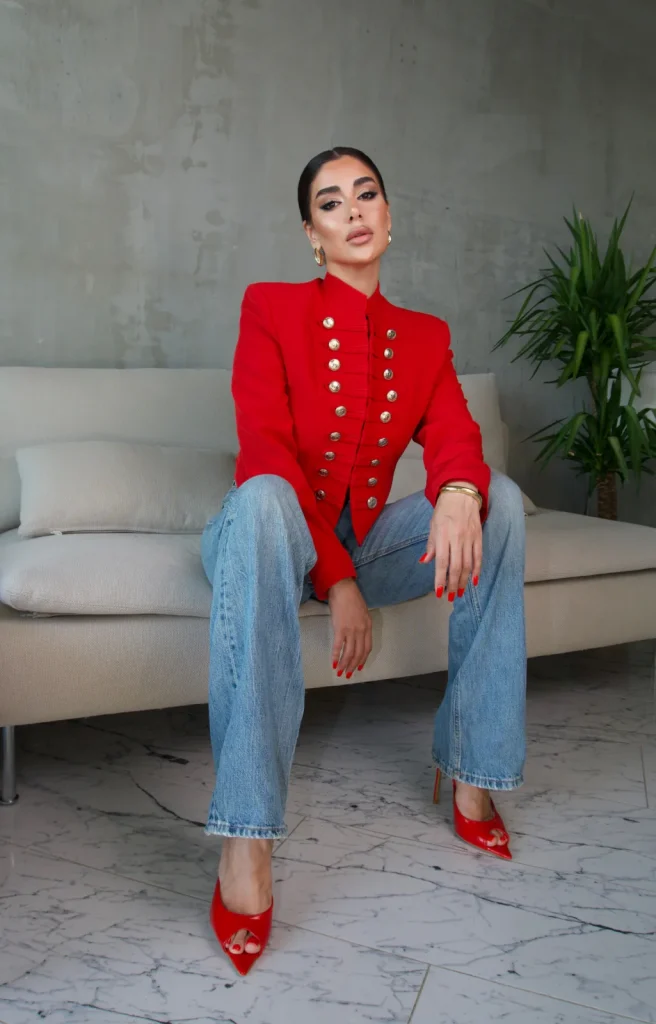
A suit should be able to sit down. That is the whole test, and most fail it. Ours were photographed lying on a sofa and standing against the sky, and they passed both.
The trouser suit is the hardest thing to cut well and the easiest thing to sell badly. Too stiff and it looks borrowed. Too soft and it looks like pyjamas. For MIDAS we cut one silhouette and made it three times, in red, in cream and in black, and then we sent it to two very different addresses.
The stand-collar suit
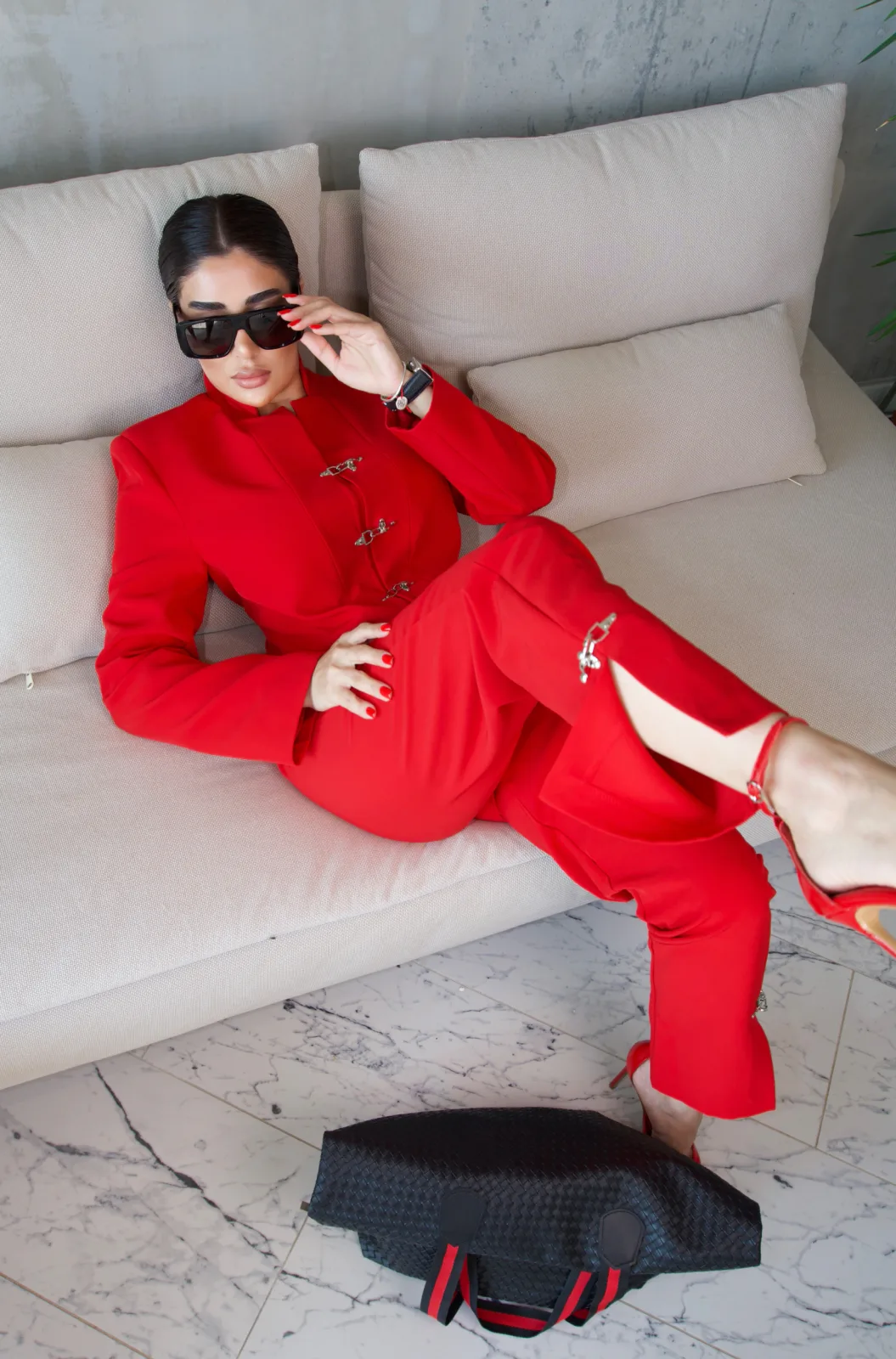
The silver-clasp stand-collar suit closes with a row of small hooks rather than buttons, so the front stays clean and the collar stands without a lapel to hold it. The trousers are straight, high, and long enough to break once over a heel. There is nothing to adjust and nothing to tuck.

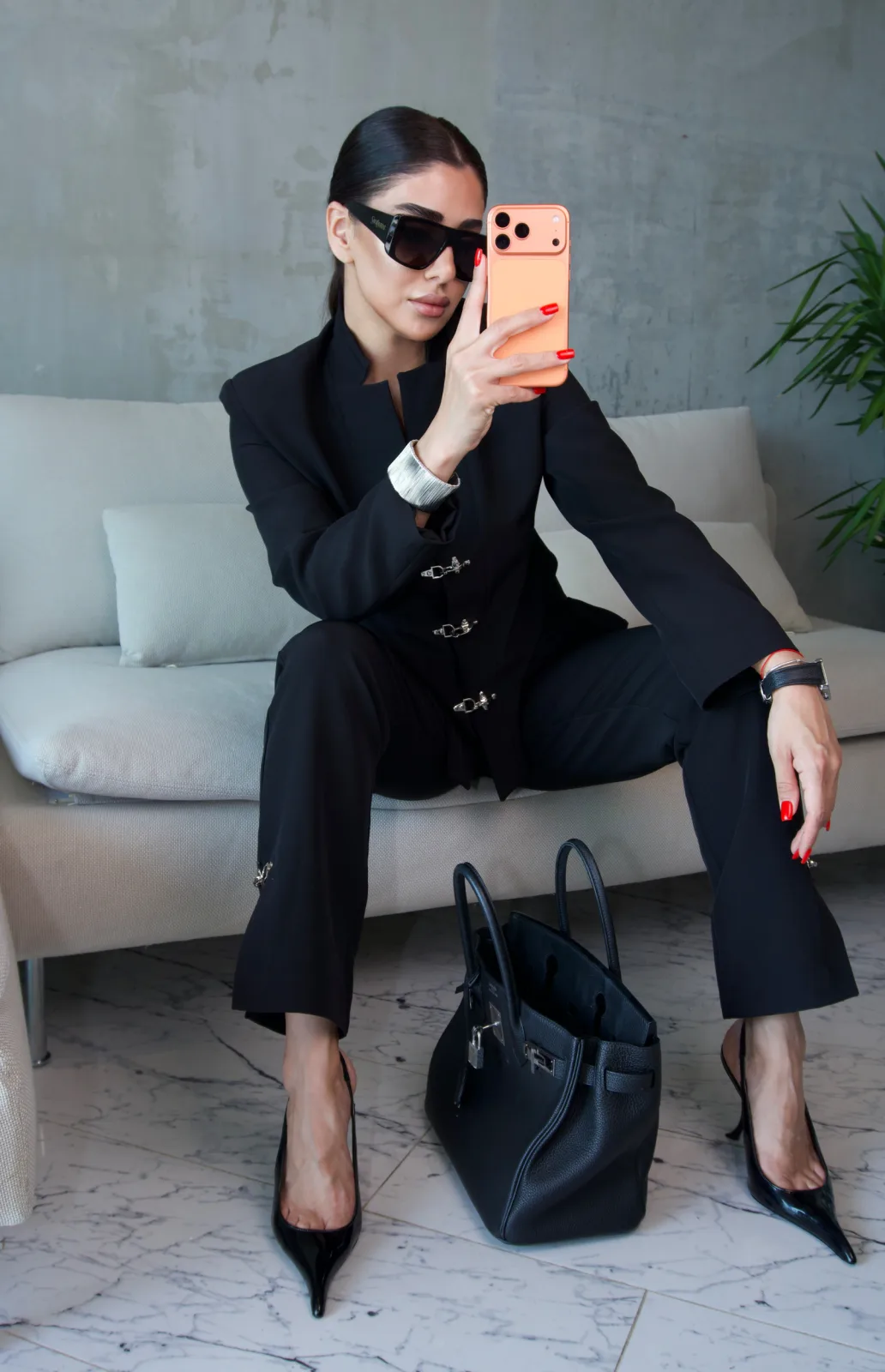
In cream it is a summer wedding that happens to be in November. In black it is every meeting you have ever needed to win. In red it is the version we put in the window.
Then we went up to the roof
The soutache-appliqué peplum suit is a different animal. A fitted jacket with a short peplum at the hip, soutache braid worked over the shoulder and chest, and a trouser with enough width to move. We took it up to a terrace above the city, in the last hour of the afternoon, when the light goes gold on its own and asks for nothing.

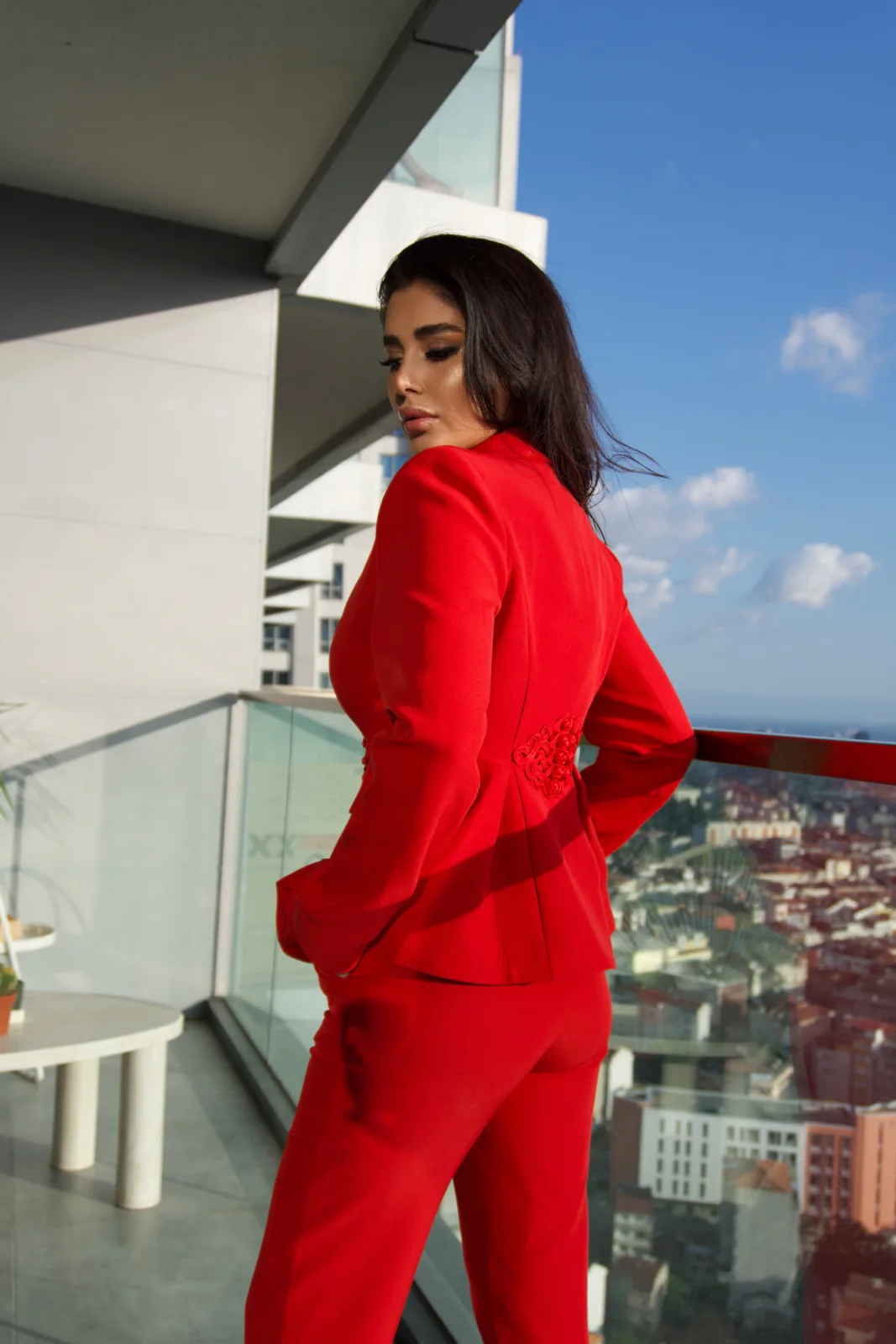
Red against a blue sky is one of the oldest tricks there is. We used it anyway. Available in cream, black and red, standard size run.

The rest of the suiting
MIDAS carries seven suits in all. Beyond the two above: the gold-button wide-leg suit, the lace-up corset blazer suit, the puff-sleeve one-button suit, the velvet peplum harem suit and the stud-trim puff-shoulder set. Every one of them was fitted on a body that moves, not a form that does not.
All of them live in Sets and Suits. For the trade: a suit is sold as a two-piece and ordered by colour, and the red stand-collar is the one we would place near the door.